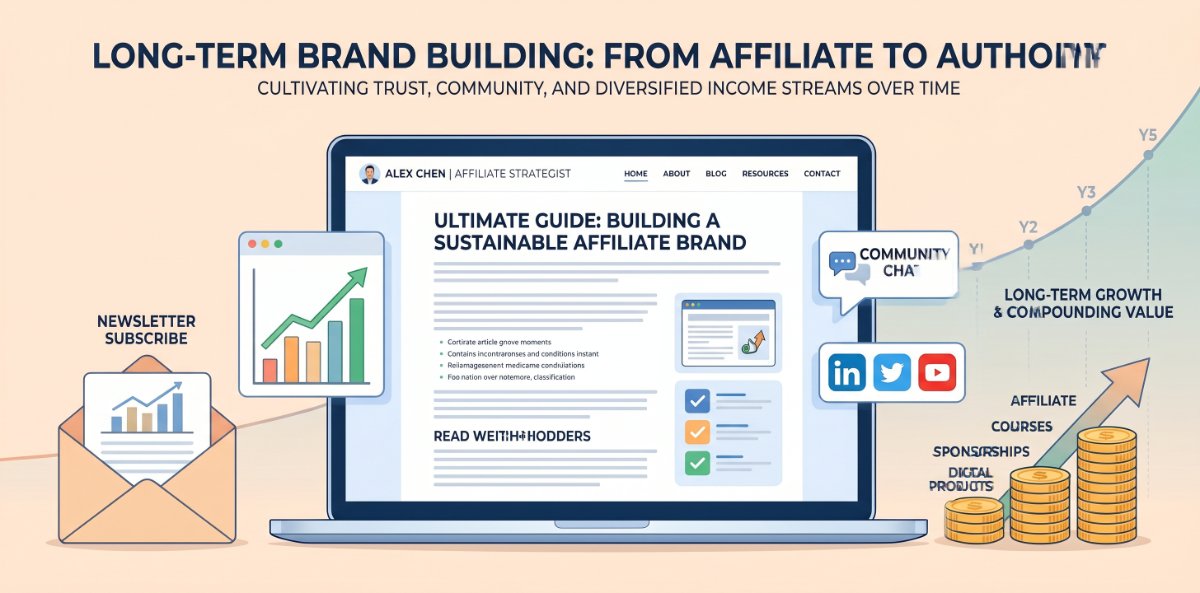
Most affiliates start by chasing clicks and commissions. That can work in the short term, but it is fragile. One algorithm update, one policy change, or one merchant shutting down a program can cut off the income overnight. Affiliates who last are the ones who treat what they are doing as a brand, not just a monetisation tactic.
This post looks at how to build a durable, recognisable affiliate brand that keeps earning and growing even as products, platforms, and trends change.
Decide who you are for and what you stand for
Long‑term brands are clear about who they serve and why they exist. They are not “an Amazon review site” or “a coupon page.” They are a voice and a point of view in a specific space.
Start with three simple definitions:
- Audience: Who is this really for? Be specific (for example, “beginner home gym owners with limited space” instead of “fitness fans”).
- Promise: What will someone consistently get from you? It might be honest reviews, deep tutorials, or curated deals that save time and frustration.
- Values: What lines will you not cross to make a commission? Think about honesty, transparency, and how you treat your audience’s time and trust.
These answers shape everything: what you promote, how you talk, which merchants you work with, and which offers you refuse even if the payout looks tempting.
Build a recognisable identity, not generic pages
If your site, social profiles, and emails look like any other template‑driven affiliate project, people will forget you the moment they click away. A brand, even a small one, is recognisable.
Focus on a few elements:
- Name and visuals: Choose a name, logo, and colour palette that fit your niche and stick with them everywhere. Consistency matters more than being clever.
- Voice and tone: Decide how you speak. Are you calm and technical, casual and witty, or somewhere between? Keep that voice consistent across articles, emails, and videos.
- Point of view: Do you have strong opinions on what actually works in your niche? Show them, with reasons. People follow perspectives, not neutral comparison tables.
Over time, your audience should be able to recognise you from a screenshot or a snippet of copy without seeing the logo.
Prioritise trust over short‑term earnings
Affiliate marketing only works at scale when people trust your recommendations. That trust is slow to build and quick to lose.
A long‑term approach means:
- Being honest about pros and cons, not pretending every product is perfect.
- Saying “this is not for you if…” as often as you say “this is ideal if…”.
- Avoiding products or merchants that have poor support, bad refund practices, or misleading claims, even if the commission is high.
- Being transparent about affiliate relationships and disclosures.
Some of the most profitable affiliates are the ones who routinely tell their audience not to buy certain things. That honesty is what makes their “yes” powerful.
Create assets you own: site, email list, and community
Relying purely on search or someone else’s platform is a risk. Algorithms change, accounts get banned, and traffic sources dry up. A real brand builds assets it controls.
Three core assets matter most:
- Your website: This is your home base. It should host your best content, your story, and your evergreen guides. Social and search should feed people back here.
- Your email list: Email lets you communicate directly without an algorithm in the middle. Use it to deepen relationships, share stories, and highlight your most important recommendations.
- Your community: This may be a forum, a Facebook group, a Discord server, or comments on your site. Anywhere your audience can talk with you and with each other strengthens the brand.
Affiliate links are just one layer on top of these assets. If one network disappears, the audience remains.
Think in relationships, not just programs
Long‑term affiliates do not just join programs; they build relationships with brands, managers, and other creators.
That looks like:
- Being a reliable partner for merchants: sending consistent, high‑quality traffic and communicating clearly.
- Sharing performance insights with affiliate managers and suggesting improvements (for example, better landing pages or extra assets) instead of just dropping links.
- Collaborating with other affiliates or influencers in your niche on content, bundles, or events.
These relationships can lead to better commission rates, exclusive deals, early access to products, and collaborations that casual affiliates never see.
Tell a story that runs through your content
Brands are memorable because they tell a story over time. For an affiliate, that story might be about personal progress, helping a certain type of person improve their life, or demystifying a complex topic.
You can build this story by:
- Sharing your own journey, successes, and mistakes in your niche.
- Showing real‑world use of the products you recommend instead of only linking to them.
- Revisiting topics over time, updating guides, and explaining what has changed and why.
When people feel like they are following a journey rather than isolated posts, loyalty and repeat visits naturally grow.
Diversify income without diluting the brand
A strong affiliate brand is often the seed of other income streams: your own products, consulting, sponsorships, or memberships. The key is to diversify in ways that fit your promise and values.
Potential extensions include:
- Paid courses or ebooks that go deeper than your free content.
- Group programs, workshops, or live sessions for your most dedicated followers.
- Sponsored posts or brand partnerships, clearly labeled and chosen for genuine fit.
- Your own digital or physical products that solve recurring problems your audience has.
These layers reduce reliance on any single affiliate program and signal to your audience that you are building something enduring.
Measure success in loyalty, not just clicks
If you only measure clicks and commissions, you will keep optimising for short‑term spikes. Long‑term brands also track signals of depth and loyalty.
Useful indicators include:
- Direct visits and branded searches for your name or site.
- Email engagement and replies, not just list size.
- Repeat visitors and time spent reading or watching.
- Community activity and word‑of‑mouth referrals.
These metrics are quieter but they tell you whether you are building something people care about, not just catching them once on their way to a purchase.
A quick checklist for long‑term affiliate brand building
Use this as a snapshot of where you stand right now:
- You can clearly describe your audience, promise, and values in a few sentences.
- Your site, socials, and emails share a consistent name, look, and voice.
- You publish a mix of educational, experiential, and commercial content, not only “best X” lists.
- You own your main assets: website, email list, and at least one engaged community space.
- You have ongoing relationships with at least a few merchants or managers, not just program logins.
- You track loyalty indicators (return visits, branded search, email replies), not just clicks and commissions.
If several of these are missing, that is not a failure; it is a roadmap. Each box you can tick moves you away from being just another anonymous affiliate and closer to being a brand that people recognise, trust, and return to over years, not weeks.