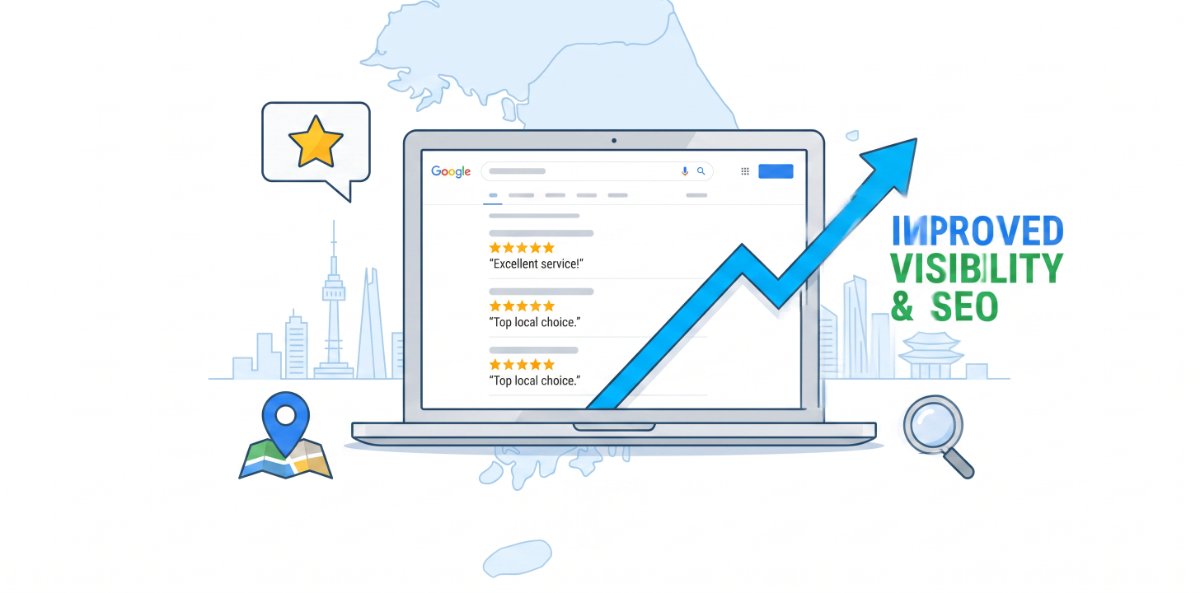
Google reviews do help SEO, especially for local visibility, but not in a simple “more stars equals rank one” way. They feed into how Google understands and ranks local businesses, and they heavily influence which business users notice and click on in search results.
Google reviews do help SEO, especially for local visibility, but not in a simple “more stars equals rank one” way. They feed into how Google understands and ranks local businesses, and they heavily influence which business users notice and click on in search results.
How reviews feed into Google’s local rankings
Google’s own local ranking guidance highlights three ideas: relevance, distance, and prominence. Reviews sit inside that third idea, prominence, alongside links, citations, and general brand awareness.
In practice, reviews can help you:
- Appear more often in the local “map pack” and Google Maps when people search “near me” or use city‑based terms.
- Avoid being filtered out when Google has many similar local options to choose from.
- Stand out visually in results through star ratings and review snippets, which attract more clicks.
Google does not rank only by review count or average score, but strong review signals make it easier for the algorithm to treat a business as trusted, active, and worth showing.
What Google seems to care about in reviews
For both rankings and user trust, the pattern of your reviews matters more than any single number.
Key elements include:
- Volume: Having a healthy number of reviews compared with competitors in your area and category.
- Recency: A steady stream of new reviews is better than a cluster from years ago; freshness signals an active, operating business.
- Rating: Businesses with ratings above roughly 4.0–4.5 stars tend to be more competitive in the local pack, all else equal.
- Detail: Text that describes specific services, locations, and outcomes helps both Google and potential customers understand what you actually do.
- Behaviour: When strong reviews lead to more clicks, calls, direction requests, and visits, those behavioural signals feed back into local prominence.
A business with slightly lower stars but many recent, detailed reviews and engaged responses can look more trustworthy than a competitor with a perfect score and only a handful of old reviews.
How reviews support broader SEO, not just maps
Reviews mainly influence local SEO, but they also support wider search performance in a few indirect ways:
- Entity understanding: Repeated mentions of products, services, and locations in reviews help Google connect your brand with specific topics and areas.
- Better click‑through: When star ratings or review snippets appear next to your brand in search, users are more likely to choose you over a similar listing with weaker social proof.
- Content signals: Detailed reviews often contain natural keywords and phrases that reflect how real customers talk, which can reinforce relevance across your web presence.
Reviews will not replace solid on‑page optimisation and links, but they amplify the effect of the work you are already doing.
Common myths about reviews and SEO
Because reviews feel close to rankings, there are a few persistent misunderstandings worth clearing up:
- “If I get to 5.0 stars, I will rank number one.”
- In reality, Google weighs many signals. Proximity, relevance, on‑page optimisation, links, and overall prominence all matter. Reviews help, but they do not override everything else.
- “More reviews always beat fewer reviews.”
- A business with hundreds of thin or suspicious reviews will not necessarily outrank a smaller business with fewer but high‑quality, recent, and detailed reviews supported by a better website and profile.
- “Only positive reviews help.”
- A profile with a mix of mostly positive reviews and a few negatives (handled well) often looks more authentic than one with nothing but glowing five‑star comments. How you respond to criticism is part of the trust signal.
- “If I ask for reviews, Google will penalise me.”
- Asking genuine customers for honest feedback is fine. The problem is incentives, fake reviews, or patterns that look manufactured rather than organic.
This kind of clarity helps business owners sanity‑check what they have heard and gives SEOs and marketers a handy reference to share with stakeholders.
A practical review strategy that helps SEO
For business owners, marketers, and SEOs, the same core habits drive both better reviews and better visibility:
- Make it routine to ask: Build review requests into your process after completed jobs, visits, or successful support interactions, using direct Google review links.
- Aim for natural volume and pace: Steady, ongoing reviews look healthier than sudden spikes, and they keep your profile fresh in Google’s eyes.
- Respond thoughtfully: Reply to both positive and negative reviews with useful, calm responses; this reassures customers and adds more relevant text to your profile.
- Never fake it: Bought or fake reviews risk removal and can damage both rankings and reputation if patterns look suspicious.
- Use what customers say: Repeated phrases and concerns in reviews are clues for keyword targeting, FAQ sections, and content topics on your website.
Simple review and SEO checklist
To make this easy to act on, you can treat the following as a quick self‑audit or implementation list:
- Google Business Profile is fully completed (categories, hours, services, photos, links).
- A direct review link is created and used in follow‑up emails, SMS, or printed materials.
- The team knows when and how to ask for reviews as part of normal process.
- There is a monthly habit of replying to all new reviews, positive and negative.
- At least a few recent reviews from the last 30–60 days include detailed text, not just star ratings.
- The website includes a reviews or testimonials section, or selectively embeds Google reviews.
- Recurring themes from reviews are feeding into FAQs, blog topics, and landing page copy.
Business owners can use this to see where they stand today. Marketers can turn it into an internal SOP. SEOs can plug it into their standard local optimisation checklist.
Where reviews fit in the bigger SEO picture
For all three audiences, it helps to see Google reviews as one important pillar inside a full local SEO setup:
- Business owners get more calls, bookings, and walk‑ins when strong reviews combine with a complete Google Business Profile and accurate information everywhere.
- Marketers get a visible, persuasive asset that improves conversion from both paid and organic traffic and feeds ideas into campaigns.
- SEOs get a ranking signal that supports the map pack and reinforces other efforts like content, links, and technical fixes.
On their own, reviews will not carry a weak site or a neglected profile. When they sit on top of good fundamentals, though, they are one of the simplest and most powerful levers available for improving local visibility and overall search performance.