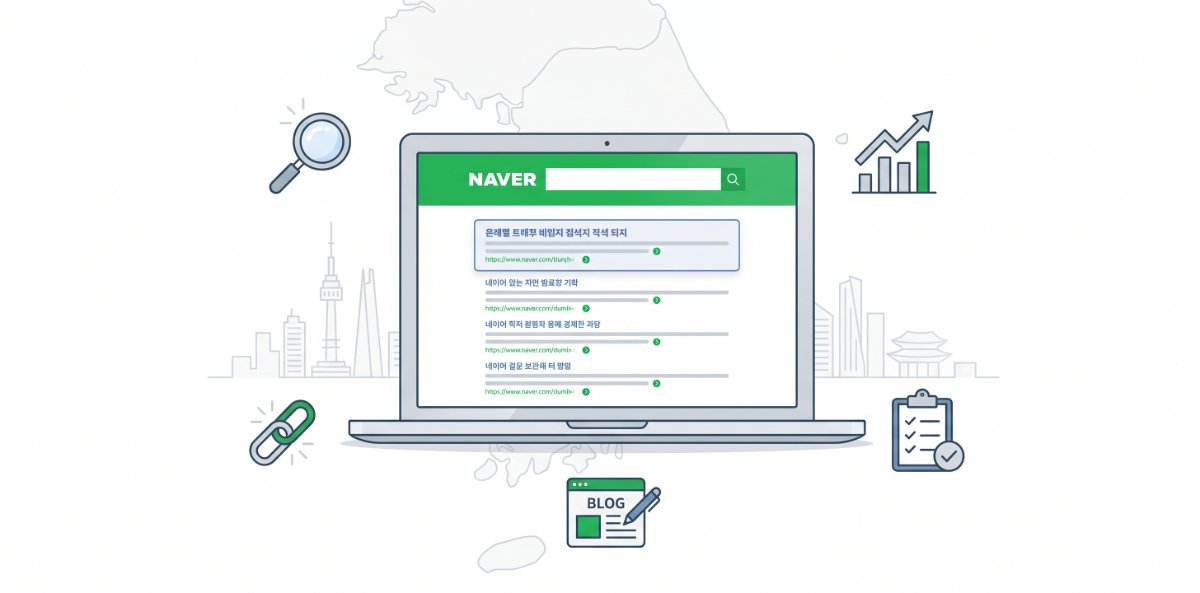
For brands that are serious about South Korea, treating Naver as “just another search engine” is the fastest way to stay invisible. Naver’s ecosystem is part search engine, part content platform, and part social network. It rewards brands that lean into those dynamics instead of simply porting over a Google SEO checklist.
At a practical level, success on Naver comes from three pillars. The first is getting the technical basics right so Naver can actually crawl and index your site. The second is building genuinely useful Korean‑language content that matches how locals search. The third is investing in Naver’s own ecosystem, particularly Naver Blog and communities, rather than ignoring them in favour of your own domain.
Start with Naver’s own tools, not Google’s shadow
Any serious Naver strategy begins by claiming and verifying your site in Naver’s webmaster tools (Naver Search Advisor). That is where Naver discovers your domain, crawls pages, and flags problems that might quietly block visibility. A clean technical base does not win rankings on its own, but without it, nothing else matters.
For Korean search, a few technical choices matter more than many non‑specialists realise. You need fast loading on Korean mobile networks, correct language and regional targeting, and a clear, crawlable architecture where Naver’s bots can move easily from page to page. Add a sensible XML sitemap, a correctly configured robots.txt, no accidental “noindex” tags, and modern HTTPS, and you have the groundwork in place.
To keep this from being abstract, it helps to treat technical Naver SEO as a checklist:
- Site verified in Naver Search Advisor
- One up‑to‑date XML sitemap submitted and referenced in robots.txt
- Mobile‑friendly layout tested on common Korean devices
- Clean internal linking with no major orphaned sections
- Correct Korean language and regional settings
With this in place, Naver can at least see and evaluate what the brand is doing.
Think in Korean queries, not translated keywords
Keyword research for Naver starts with a mindset shift. Directly translating English keywords into Korean almost always produces phrases that look fine in a spreadsheet but do not match how Koreans actually search. The goal is to understand native phrasing, the mix of brand terms plus generics, and the long‑tail questions that imply real purchase intent.
In practice, this means relying on Korean data. Use Naver’s own keyword tools inside Naver Ads to pull real query volumes, then group terms into topics rather than chasing isolated words. Focus on head terms for awareness, but put serious effort into very specific phrases describing problems, use‑cases and product attributes. That long tail is where intent is clearest.
Titles on Naver tend to work best when they are short and literal. As a rule of thumb, keep them under roughly 40 Korean characters and mirror the core query instead of chasing clever wordplay. Meta descriptions around 70 to 90 characters that clearly explain what users will get from the page help improve click‑through and keep expectations aligned.
Content that feels native, not “localised”
Naver is unforgiving to content that reads like a translation exercise. Machine‑translated copy with odd phrasing, unnatural word order, or obviously non‑native idioms tends to perform poorly. Korean users bounce quickly when something feels foreign, and that behaviour feeds back into weaker rankings.
The sites that quietly dominate their categories usually share a few traits:
- Content written or at least edited by native Korean speakers
- Articles structured around local expectations, including Korean examples, brands and use‑cases
- Clear headings and scannable sections aligned to how people read on mobile
- A steady cadence of updates that keeps key pages fresh rather than static
Length for its own sake is not rewarded. What matters is how well the content satisfies intent. Engagement signals are crucial. When users click, stay on the page, scroll, and interact rather than bouncing back to Naver, the page is effectively voted up as satisfying for that query. UX, clarity, and relevance are therefore core SEO levers on Naver, not afterthoughts.
Two quick, anonymised examples show the pattern.
A mid‑size beauty brand translated its English pages directly into Korean and saw minimal Naver traction. Traffic only jumped once it rebuilt key pages with native writers, added product‑use tutorials in Korean, and supported them with Naver Blog content.A B2B software vendor relied on an English‑only site and Google traffic. After launching a dedicated Korean landing page targeting long‑tail queries plus a series of Korean‑language Naver Blog explainers, it began to pick up qualified leads from Naver search that had previously gone to local competitors.
Understanding how Naver’s results really look
One of the biggest mental shifts for non‑Korean marketers is accepting that a Naver results page is not just “10 blue links.” A typical Naver SERP can include:
- Paid ads and Naver Shopping listings
- A block of Naver Blog results
- Naver Café (community) posts and Q&A content
- News results from Korean media
- Video or other rich media
- Standard organic web results lower down
For each of those blocks, a brand has different levers. Ads and Shopping require paid investment and a proper Naver Ads setup. Blog visibility depends on running an active Naver Blog with keyword‑aligned posts. Café visibility comes from genuine participation in relevant communities. News visibility often follows PR and media outreach in Korea. Organic web links reflect the strength of the main site and its local authority.
Explaining this layout to stakeholders is crucial. It makes clear why “ranking first on Naver” is more complex than simply optimising a single web page.
Playing inside Naver’s own ecosystem
The biggest difference from Google is how aggressively Naver promotes its own properties. Naver Blog, Naver Café, Naver Post and other internal services regularly sit above standard web results, especially in competitive or trend‑driven categories.
For brands, ignoring Naver Blog is usually a strategic mistake. A well‑run Naver Blog can outrank the brand’s own domain for important queries. It makes sense to treat it as a parallel owned channel rather than an afterthought. In practical terms, that means:
- Choosing Blog categories that closely match your industry and themes
- Posting on a consistent schedule, for example two to three posts per week
- Using clear, keyword‑aware Korean titles that mirror search queries
- Structuring posts with a short summary, detailed body content, and a soft call‑to‑action
- Including helpful images, charts or screenshots to increase engagement
- Using tags thoughtfully so posts are discoverable across related topics
Naver Café deserves similar attention. Joining relevant communities, contributing meaningful answers, and sharing expertise rather than pushing overt promotions builds trust and generates organic mentions. Over time, those discussions become durable proof that the brand is part of the local ecosystem rather than simply a foreign advertiser.
Authority in Korea is local, not global
Global domain authority metrics are often misleading for Naver. A site with impressive international links may still look weak in a Korean context if there are few or no links, mentions, and citations from Korean‑language sources.
Building authority for Naver is a localisation exercise:
- Secure coverage or listings in Korean news outlets and industry portals
- Collaborate with Korean bloggers and creators who publish on Naver Blog
- Earn mentions in relevant Naver Cafés, not via spam but through useful contributions
- Make sure brand and product names are consistently written in Korean across the web
The pattern that matters most is simple. Naver needs to see that other Korean entities talk about the brand, link to it, and treat it as part of the local web rather than an outsider.
How AI and new behaviours are changing Naver
Recent shifts in user behaviour and generative AI have quietly changed how people use Naver. Many users now turn to AI chat tools for ideation or broad research, then jump into Naver to validate information, compare options, and make purchase decisions. That combination is driving more conversational, long‑tail queries into Naver. Many of these queries sound closer to natural speech than to older, telegraphic keyword strings.
For brands, that means a change in content strategy. It is no longer enough to focus on short, generic keywords. You need to build content that answers specific, nuanced questions. It helps to use headings and FAQ‑style sections that mirror how real people phrase their concerns. Detailed product specs, comparisons, and use‑case stories must be available in Korean, not just high‑level marketing copy.
The brands that adapt to these behaviours now will be better positioned as Naver continues to integrate AI more deeply into its search experience.
A 90‑day Naver roadmap you can actually execute
To turn all of this into something concrete, it helps to show stakeholders a simple 90‑day plan.
Weeks 1 to 2: foundations
- Verify the site in Naver Search Advisor
- Submit a clean XML sitemap and fix crawl errors
- Audit mobile performance and core UX for Korean users
- Confirm correct language, region and SEO settings
Weeks 3 to 4: Korean keyword strategy
- Use Korean data to build a keyword list grouped by topics
- Map core queries to existing or planned pages on the main site
- Define title and meta description guidelines that are short, literal and Korean‑first
Weeks 5 to 8: content rebuild
- Rewrite or create priority pages in natural Korean, based on native input
- Add clear headings, local examples and FAQ‑style sections for long‑tail queries
- Implement internal links so Naver can easily understand topic clusters
Weeks 9 to 12: ecosystem and authority
- Launch or refresh a Naver Blog with a realistic posting calendar
- Start regular posts that support key search topics and long‑tail questions
- Join relevant Naver Cafés and begin contributing high‑value answers
- Begin outreach to Korean media, bloggers and partners to build local mentions
Handled this way, Naver stops being an opaque local platform and becomes a predictable channel where effort compounds. Brands that respect the platform’s quirks, build truly native Korean content, and invest in Naver’s own ecosystem tend to see rankings and traffic grow steadily over the medium term instead of chasing short‑lived tricks.