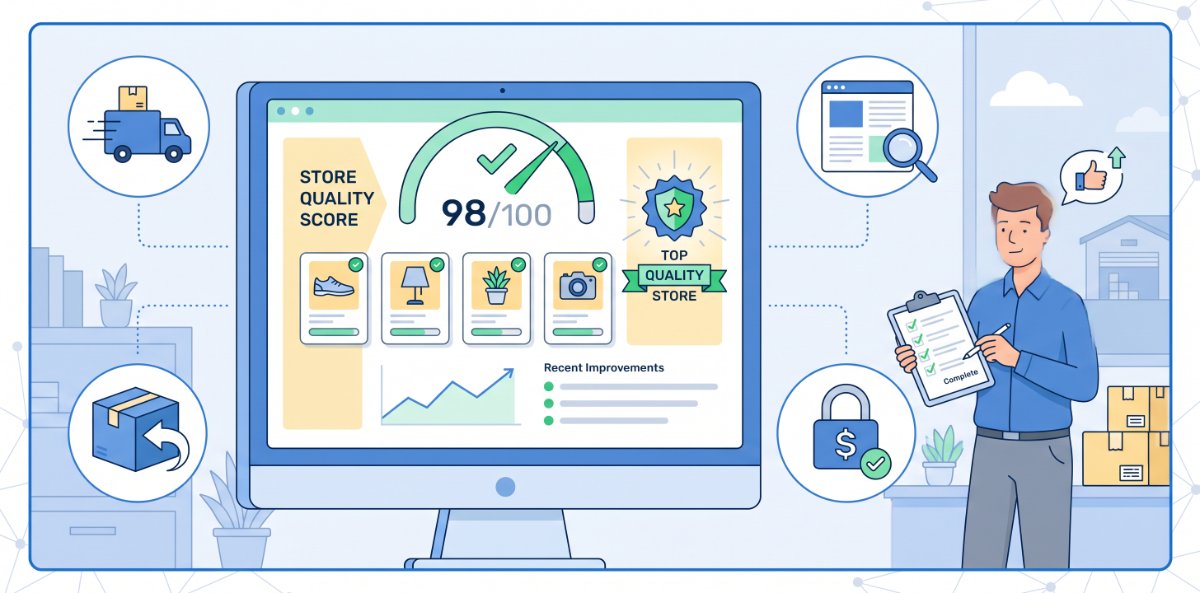
Store quality in Google Merchant Center is not just a hidden score in a submenu. It is Google’s way of grading the overall shopping experience your domain delivers and using that grade to influence how prominently your products appear, how much users trust you, and whether you qualify for the Top Quality Store badge. For anyone running Shopping ads or free listings, understanding and improving this score is now part of the job, not an optional extra.
What “store quality” actually measures
Once a Merchant Center account is up and running with approved products, Google automatically evaluates the domain in the Store Quality program. The score is calculated at domain level and looks across four main areas:
- Shipping experience (speed, cost, reliability).
- Return experience (clarity and fairness of return policies).
- Browsing experience (site usability, consistency, transparency).
- Purchase experience (secure, smooth checkout and trustworthy payment options).
Each metric inside these categories is graded on a scale from low through to exceptional, and those ratings roll up into a single overall store quality score. Hit the highest overall rating and your domain can earn the Top Quality Store badge, which then appears on your listings as an extra trust signal.
What this means for your Merchant Center feed
Most retailers think about Merchant Center in terms of feed health: fixing disapprovals, cleaning up attributes, and making sure products are eligible to show. Store quality sits one level above that. It influences how Google views your entire domain, which then feeds into:
- How confident Google is in sending shoppers to you.
- Whether your store gets extra prominence via the Top Quality Store badge.
- How your offers compare to similar competitors with better or worse customer experience.
A high‑quality feed with poor store quality is like a polished catalogue attached to a messy, unreliable shop. You might still get impressions, but you will struggle to earn the extra trust and visibility that come from consistently good service, clear policies, and a smooth on‑site experience.
The four pillars of store quality, in plain language
1. Shipping experience
Google looks at how fast and how affordably you deliver, and whether you actually meet the expectations you set in Merchant Center. Long delivery estimates, high shipping costs, or inconsistent fulfilment can drag this category down.
Ways to strengthen shipping quality include:
- Offering competitive delivery times and realistic cut‑off times.
- Being upfront about shipping costs before checkout.
- Ensuring feed shipping settings match what is shown on site.
2. Return experience
Return policies are a major trust factor. Google expects clear, fair policies that cover both defective and (ideally) non‑defective items if you want to reach the highest ratings.
Key steps include:
- Displaying a clear return window and conditions on site.
- Allowing returns for more than just faulty products where commercially viable.
- Making sure return terms in Merchant Center match what customers see on your pages.
3. Browsing experience
This is where classic site quality comes in. Google wants to see a professional, functional website with consistent product data, transparent pricing, and no placeholder or obviously incomplete content.
Signals that help your browsing score:
- Clean navigation and category structure that makes products easy to find.
- Accurate, consistent product information between feed and landing page.
- Clear contact details, company information, and policies that build trust.
4. Purchase experience
Finally, Google checks how safe and smooth it is to actually buy from you. This includes secure payment, a stable checkout, and reassuring post‑purchase communication.
You can improve this by:
- Using HTTPS across the entire site, especially checkout.
- Offering familiar payment methods and e‑wallets where possible.
- Avoiding confusing redirects or surprise fees at the final step.
The Top Quality Store badge and why it matters
If your store quality score reaches the highest tier overall, your domain can qualify for the Top Quality Store badge. This badge shows alongside your Shopping listings and in free product results, telling shoppers that Google sees you as a consistently reliable place to buy.
The practical benefits include:
- Extra trust at a glance, which can lift click‑through and conversion rates.
- Stronger differentiation in crowded categories where prices and images look similar.
- A reputational advantage that compounds as more users learn to recognise the badge.
Google can adjust thresholds and criteria over time, so stores may gain or lose the badge even if their internal processes appear unchanged. That is why regular checks in the Store Quality section of Merchant Center are important.
How to use store quality in day‑to‑day management
For anyone actively managing a Merchant Center feed, store quality becomes another lens for prioritising work:
- When fixing feed issues, ask whether there is also a store‑quality angle (for example, inaccurate prices or weak landing pages).
- When planning improvements, target the lowest‑rated categories first, such as returns or shipping.
- When reporting to stakeholders, show not only feed approval rates and ROAS, but also store quality trends and progress toward the Top Quality Store badge.
Think of store quality as the bridge between your technical setup (feeds, attributes, policies) and the real customer experience. If your metrics here are weak, pushing harder on bids and budgets usually just amplifies a shaky foundation.
Where to start if you have never looked at it
A simple starting plan looks like this:
- Open the Store Quality page in Merchant Center and note your overall rating and each category’s score.
- Screenshot the current state so you can measure progress later.
- Pick one weak area (for example returns or browsing) and fix the most obvious issues on site and in your feed.
- Encourage genuine customer reviews and set up store ratings if you have not already.
- Re‑check your scores monthly and treat improvements as a long‑term project, not a quick toggle.
Handled this way, store quality stops being a mysterious score and becomes a practical roadmap for making your Merchant Center account more competitive, your Shopping traffic more profitable, and your customers more confident in buying from you.